




17 Jun Securing Company Data from Cyber Threats: A Strategic Framework for 2026
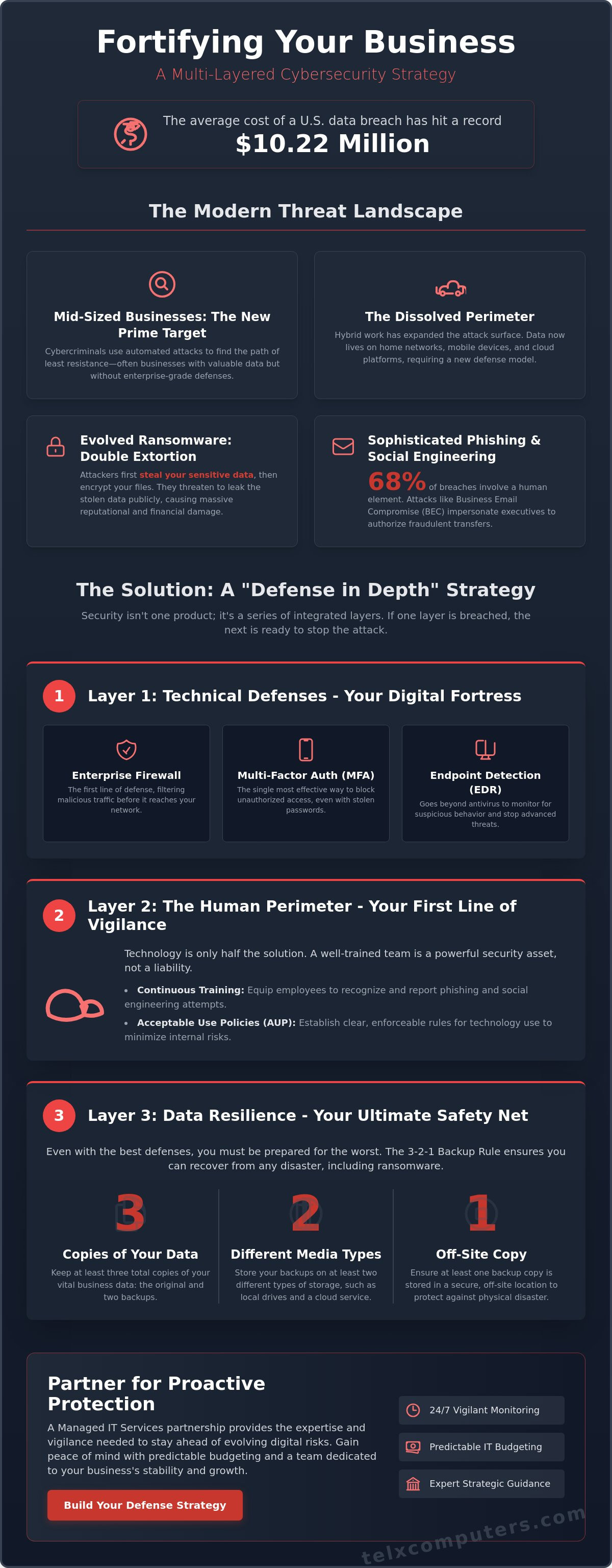
Did you know the average cost of a data breach in the United States has climbed to a record $10.22 million? For most business leaders, this figure represents more than just a financial risk; it’s a symbol of the catastrophic loss that can occur when defenses fail. You’re likely tired of the confusing jargon and the mounting pressure of regulations like CMMC and the latest NIST CSF 2.0 standards. It’s common to feel that securing company data from cyber threats is a task reserved only for those with unlimited IT budgets.
We understand that you need a partner who values stability and reliability as much as you do. You’ll learn how to build a resilient, multi-layered defense system that protects your business assets from evolving digital risks without draining your resources. This article outlines a strategic framework focused on proactive monitoring and internal integration. We’ll move past the technical noise to show you how a secure network creates the foundation for sustainable growth and total peace of mind.
Key Takeaways
- Understand why mid-sized businesses have become primary targets and how to shift from reactive fixes to a holistic security strategy.
- Implement a “Defense in Depth” model that prioritizes securing company data from cyber threats through enterprise-grade firewalls and advanced traffic filtering.
- Strengthen your human perimeter by establishing clear Acceptable Use Policies that transform your team into a proactive line of defense.
- Secure your business continuity by applying the 3-2-1 backup rule to protect vital assets against multi-extortion ransomware attacks.
- Discover how a Managed IT Services partnership provides predictable budgeting and vigilant monitoring to keep your operations ahead of evolving digital risks.
Understanding the Modern Cyber Threat Landscape for Businesses
Effective defense isn’t a single product you install and forget. It’s a comprehensive strategy. Securing company data from cyber threats requires a holistic integration of advanced technical tools and strict administrative controls. By aligning your operations with established data security principles, you create a resilient environment where technical features directly support business outcomes. This approach transforms security from an IT burden into a strategic asset.
Modern attackers have shifted their focus. They no longer target only global corporations with massive budgets. Automated bots and AI-driven scripts now scan the entire internet for vulnerabilities, making mid-sized businesses the primary targets for these efficient, high-volume attack vectors. These organizations often possess valuable data but lack the enterprise-grade defenses of larger firms. This creates a “sweet spot” for cybercriminals looking for the path of least resistance.
To better understand this concept, watch this helpful video:
The traditional “office perimeter” has dissolved. With the rise of hybrid work models, your company data now lives on home networks, mobile devices, and various cloud platforms. This fragmentation has expanded the attack surface significantly. Hackers have evolved from creating simple viruses to launching sophisticated, multi-stage campaigns designed to bypass standard antivirus software. Your defense must be as agile as the threats it faces.
In this environment, even helpful personal tools like MyFoodChecker—which allows users to scan food barcodes for nutritional info—exist on the same devices as corporate email, highlighting the need for robust mobile application management (MAM) policies.
The Evolution of Ransomware and Data Extortion
Modern ransomware doesn’t just lock your files. It’s an extortion machine. Attackers now steal sensitive information before encrypting it, threatening to leak your private data on public forums if the ransom isn’t paid. This “double extortion” tactic creates massive reputational damage that can last years after the technical breach is resolved. Effective ransomware protection is now a mandatory requirement for business continuity. Ransomware is a business-halting event that requires more than just file backups; it demands a total recovery strategy.
Phishing and Social Engineering in a Remote World
Technology is only half the battle. Human error remains the most common entry point for digital intrusions. Industry data shows that 68% of breaches involve a human element, such as errors or social engineering. Phishing attacks have become incredibly personalized, often taking the form of “Business Email Compromise” (BEC). In these scenarios, attackers impersonate executives to trick finance teams into authorizing fraudulent wire transfers. Implementing robust managed IT services ensures that your team has the tools and training to spot these sophisticated social engineering attempts before they cause financial ruin. Securing company data from cyber threats starts with a culture of vigilance.
Implementing a Multi-Layered Technical Defense Strategy
Securing company data from cyber threats isn’t about finding a silver bullet. It’s about building a “Defense in Depth” strategy. This framework places multiple technical hurdles between your assets and an attacker. If one layer fails, the next stands ready to stop the intrusion. This layered approach creates the stability your business needs to scale without fear, turning security into a silent engine for your success.
Enterprise-grade firewalls serve as your first line of defense. Unlike basic home routers, these devices analyze every packet of data for malicious signatures. They filter out threats before they ever touch your internal systems. When paired with Multi-Factor Authentication (MFA), your security posture transforms. MFA acts as a high-tier barrier, ensuring that stolen passwords alone aren’t enough for an attacker to gain access. It’s the single most effective way to block unauthorized entry.
Traditional antivirus software is no longer sufficient for modern risks. You need Endpoint Detection and Response (EDR) to stay ahead. EDR monitors behavioral patterns across your devices, identifying suspicious activities that signature-based software might miss. This proactive stance aligns with FTC cybersecurity guidance, which emphasizes active monitoring and rapid response as core business requirements.
Securing the Network Perimeter
Professional hardware differs from consumer gear in speed, reliability, and integrated security features. Utilizing expert network IT support in Miami ensures that your infrastructure is configured correctly from the start. We recommend network segmentation to isolate critical departments. By separating guest Wi-Fi from your financial data, you contain potential threats within a single, non-critical zone, preventing lateral movement across your network.
Cloud Security and Virtualized Environments
Many leaders believe the cloud is inherently secure. In reality, cloud security is a shared responsibility between the provider and the business, requiring active management of user permissions and data access. The provider secures the physical infrastructure, but you must secure your specific environment. Consider this checklist for Microsoft 365 and Google Workspace:
- Enforce MFA across all user accounts without exception.
- Disable legacy protocols that bypass modern security checks.
- Audit third-party application permissions every quarter.
- Implement conditional access policies based on user location and device health.
If you’re looking to strengthen your defenses, a comprehensive network evaluation can reveal hidden vulnerabilities before they become costly liabilities.
The Human Perimeter: Training and Security Policy
Technology provides the walls, but your employees hold the keys. True resilience in securing company data from cyber threats requires shifting the focus from a purely technical checklist to a robust organizational culture. When security becomes a shared value rather than a list of restrictions, your staff transforms into a proactive defense layer. This internal alignment ensures that your growth isn’t undermined by preventable human errors.
Implementing an Acceptable Use Policy (AUP) is the first step toward this cultural shift. An AUP clearly defines how company resources should be used, setting expectations for everything from email etiquette to software downloads. By providing this clarity, you reduce technical anxiety and empower your team to act decisively. We also recommend the universal adoption of enterprise-grade password managers. These tools eliminate the risks associated with weak or reused credentials, which remain a primary target for automated scripts.
Simulated phishing tests provide a safe environment for employees to sharpen their instincts. Rather than waiting for a real attack, these simulations offer immediate feedback and teach staff how to identify sophisticated lures. This hands-on approach is far more effective than static presentations. It builds the “muscle memory” needed to spot a Business Email Compromise attempt before any data is compromised.
Developing an Internal Cybersecurity Policy
A well-crafted policy serves as your operational blueprint. It must cover data handling, incident reporting, and remote access protocols. For specialized sectors, these policies are essential for maintaining compliance. For instance, our work with healthcare IT services in Miami and law firms often focuses on aligning internal policies with strict HIPAA or legal confidentiality requirements. If your business operates a “Bring Your Own Device” (BYOD) model, your policy must include specific security standards for personal hardware. Following state-level cybersecurity advice helps ensure your documentation meets modern legal and insurance standards. Essential components of a business security policy include:
- Data classification and handling procedures for sensitive information.
- Clear access control and password complexity requirements.
- Specific incident response steps and designated reporting channels.
- Security standards for remote work and personal device usage.
Ongoing Security Awareness Training
The days of annual, hour-long training sessions are over. Modern threats evolve too quickly for static education. We advocate for continuous micro-learning modules that deliver bite-sized insights throughout the year. This method keeps security top-of-mind without disrupting daily workflows. Regular education significantly reduces the volume of help desk tickets by preventing common configuration errors.
To identify where your team might be most vulnerable, scheduling professional cybersecurity audits provides a clear, data-driven roadmap for improvement. Securing company data from cyber threats is an ongoing journey that begins with an informed and vigilant workforce. By investing in your people, you create a stable environment that allows your business to thrive securely.
Data Resilience: Backup and Disaster Recovery
Survival in a digital world depends on your ability to bounce back. While previous sections focused on blocking intrusions, data resilience focuses on what happens if a breach or hardware failure occurs. Securing company data from cyber threats requires a clear distinction between a simple backup and a full disaster recovery plan. A backup is merely a copy of your files. Disaster recovery is the strategic process that restores your entire business operation after a catastrophic event. Without both, a single incident can lead to permanent closure.
We implement the 3-2-1 Rule for every client we serve. This standard requires three copies of your data, stored on two different types of media, with one copy kept in a secure off-site location. To combat modern ransomware, we prioritize immutable backups. These are read-only files that can’t be modified or deleted by unauthorized users, providing a final line of defense when encryption attacks target your secondary storage. In a region like Miami, local environmental factors also play a critical role. High humidity, extreme heat, and seasonal tropical storms pose constant risks to physical server health. Protecting your assets means accounting for both digital hackers and physical climate threats.
RTO and RPO: Measuring Your Recovery Capability
You can’t manage what you don’t measure. Recovery Point Objective (RPO) defines how much data you can afford to lose, measured in time. Recovery Time Objective (RTO) determines how quickly your systems must be back online. Calculating the “cost of downtime” for your business reveals the true value of these metrics. For many firms, even an hour of lost productivity costs thousands in revenue and client trust. Integrating robust ransomware protection ensures these objectives remain achievable even during an active attack.
Automated Server Monitoring and Maintenance
Manual backups are a relic of the past. They’re prone to human error and often fail right when you need them most. Modern 24/7 business operations require server monitoring systems that work in real-time. These platforms detect hardware failures, such as overheating or disk errors, before they cause a system crash. Real-time alerts for unauthorized access attempts allow our team to intervene instantly, often resolving threats before you’re even aware they existed. This proactive vigilance is the silent engine behind a truly secure enterprise.
Don’t wait for a crisis to test your resilience. Get an instant quote for data protection and secure your business continuity today.
Partnering with a Managed IT Service Provider for Proactive Protection
The traditional “Break-Fix” model is a relic of a slower era. Waiting for a system to fail before calling for help is no longer a viable strategy for securing company data from cyber threats. In a landscape where ransomware attacks occur with increasing frequency, a reactive approach leaves your business vulnerable during the critical hours it takes to find a technician. Managed IT Services flip this script by focusing on prevention rather than just repair. We identify and resolve vulnerabilities before they can be exploited, ensuring your operations remain steady and secure.
A fixed-price monthly fee replaces the unpredictable spikes of emergency repair bills. This model provides the predictable budgeting your business needs to scale safely without the fear of hidden technical costs. As your strategic ally, Telx Computers acts as an expert guardian. We stay ahead of emerging global risks, such as the AI-powered phishing attacks that are predicted to account for over 42% of global intrusions by the end of 2026. We take pride in being the silent engine that powers your success, allowing you to focus on growth while we manage the complexities of your digital defense.
The Advantages of 24/7 Help Desk and Monitoring
Cybercriminals don’t follow a nine-to-five schedule, so neither do we. Our managed IT support acts as a seamless extension of your own company, providing a team that never sleeps. You get the benefits of a high-tier corporate IT department without the overhead of internal hiring. Because we are deeply rooted in the regional business community, we provide the rapid response capability that remote-only providers simply can’t match. This local presence in Miami and Fort Lauderdale ensures that your physical and digital assets are always under a vigilant eye.
Choosing the Right Strategic Technology Partner
Selecting an MSP is one of the most important business decisions you’ll make. You should look for a partner with proven certifications, industry-standard response times, and a strong local presence. A true ally doesn’t just offer disconnected fixes; they provide a holistic strategy that integrates with your unique operational needs. We stand behind our work with the Telx guarantee, which includes unlimited service and proactive maintenance to keep your systems running at peak efficiency. Securing company data from cyber threats is a continuous commitment that requires a partner who is always one step ahead.
Don’t leave your business assets to chance. Get a free instant quote to secure your company data today and experience the stability of a truly protected network.
Building a Resilient Foundation for Future Growth
The strategies we’ve explored provide more than just a shield; they create the stability your business needs to scale with confidence. By integrating a multi-layered technical defense with a vigilant human perimeter, you transition from technical anxiety to total peace of mind. True success in securing company data from cyber threats isn’t found in a single software fix. It’s built through a proactive operational strategy that treats security as an essential business function.
Our expert local teams in Miami, NYC, and LA stand ready to serve as your strategic ally. With 24/7 proactive monitoring and fixed-price unlimited support plans, we remove the technical burden from your shoulders. You deserve a partner who is always one step ahead of emerging risks. Secure your business today with Telx Managed IT Services and focus on what you do best. Your digital future is safe in our hands.
Frequently Asked Questions
What is the most common cyber threat for small businesses in 2026?
Social engineering remains the most prevalent threat, specifically AI-powered phishing attacks that mimic executive voices or writing styles. These intrusions often bypass traditional filters by using highly personalized lures to trick staff into revealing credentials. Businesses must prioritize continuous employee training to recognize these sophisticated attempts before they lead to unauthorized access or financial loss.
Is multi-factor authentication (MFA) really necessary for every employee?
Yes, MFA is an essential requirement for every user account within your organization without exception. It serves as the single most effective barrier against credential theft, blocking the vast majority of automated login attempts. Implementing MFA across the board ensures that even if a password is compromised, your sensitive information remains protected by an additional layer of verification.
How often should our company perform a cybersecurity audit?
We recommend performing a comprehensive cybersecurity audit at least once per year or whenever you implement significant infrastructure changes. Regular assessments help you stay ahead of evolving risks and ensure your defenses align with the latest industry standards. This proactive approach identifies hidden vulnerabilities in securing company data from cyber threats before they can be exploited by malicious actors.
Can a small business survive a major ransomware attack without professional help?
Surviving a major ransomware event without expert intervention is highly unlikely and often results in permanent data loss. Professional recovery teams possess the specialized tools needed to decrypt files and sanitize networks safely. Attempting a manual recovery can inadvertently trigger secondary extortion tactics or lead to further system corruption, making a strategic partnership essential for survival.
What is the difference between cloud backup and cloud security?
Cloud backup focuses on creating redundant copies of your files for recovery purposes, while cloud security involves the active protection of those environments. Security measures include encryption, access controls, and threat monitoring to prevent unauthorized entry in the first place. Both are necessary components of a resilient strategy for securing company data from cyber threats and maintaining business continuity.
How does managed IT service help with industry compliance like HIPAA or GDPR?
Managed IT services provide the continuous monitoring and detailed documentation required to meet strict regulatory standards. We implement the technical controls and administrative safeguards that satisfy auditors and protect client privacy. This partnership ensures your business remains compliant with evolving laws without requiring you to manage complex legal checklists or maintain deep internal regulatory expertise.
What should be the first step if we suspect a data breach has occurred?
Your first priority is to isolate the affected devices from the network to prevent the threat from spreading further. Once contained, you should immediately contact your strategic technology partner to begin the forensic investigation and incident response protocol. Quick action helps minimize the total impact and ensures you meet mandatory reporting timelines for modern regulatory requirements.
Why is local IT support better than a generic national call center for security?
Local support provides a faster response time and a deeper understanding of regional risks, such as local environmental threats or specific community compliance needs. Unlike a generic call center, a local team can provide on-site assistance when physical hardware failures occur. This physical presence builds a foundation of trust and reliability that is essential for a long-term strategic alliance.