





07 Nov Virtual CIO Services in Fort Lauderdale for Risk and Compliance Planning
A technology plan can go off course even when each IT decision seems reasonable on its own. A virtual CIO for strategic planning in Fort Lauderdale helps connect those decisions to business goals, aligning technology investments, risk planning, and executive priorities.
It makes sense to want clear direction without adding a full-time executive role. A virtual CIO provides strategic technology guidance, helping businesses forecast IT needs, prioritize projects, plan refresh cycles, and align technology choices with operational goals. Unlike day-to-day IT support, the role focuses on leadership, planning, and risk.
Here, you’ll learn how a virtual CIO can shape a technology roadmap, support risk and compliance planning, and bring structure to IT budgeting and executive decisions. You’ll also see how these responsibilities fit together, when this guidance can help, and how strategic planning connects with practical IT operations.
Key Takeaways
- Build a technology roadmap that connects business priorities to planned projects, refresh cycles, and technology decisions.
- Use risk planning to identify vulnerabilities and coordinate security measures, disaster recovery, and continuity priorities.
- Separate planned technology investments from ongoing operating needs to make IT budgets clearer and easier to align with business goals.
- Bring strategic guidance and practical IT operations together when your business needs stronger direction on technology, risk, and executive decisions.
Technology roadmaps
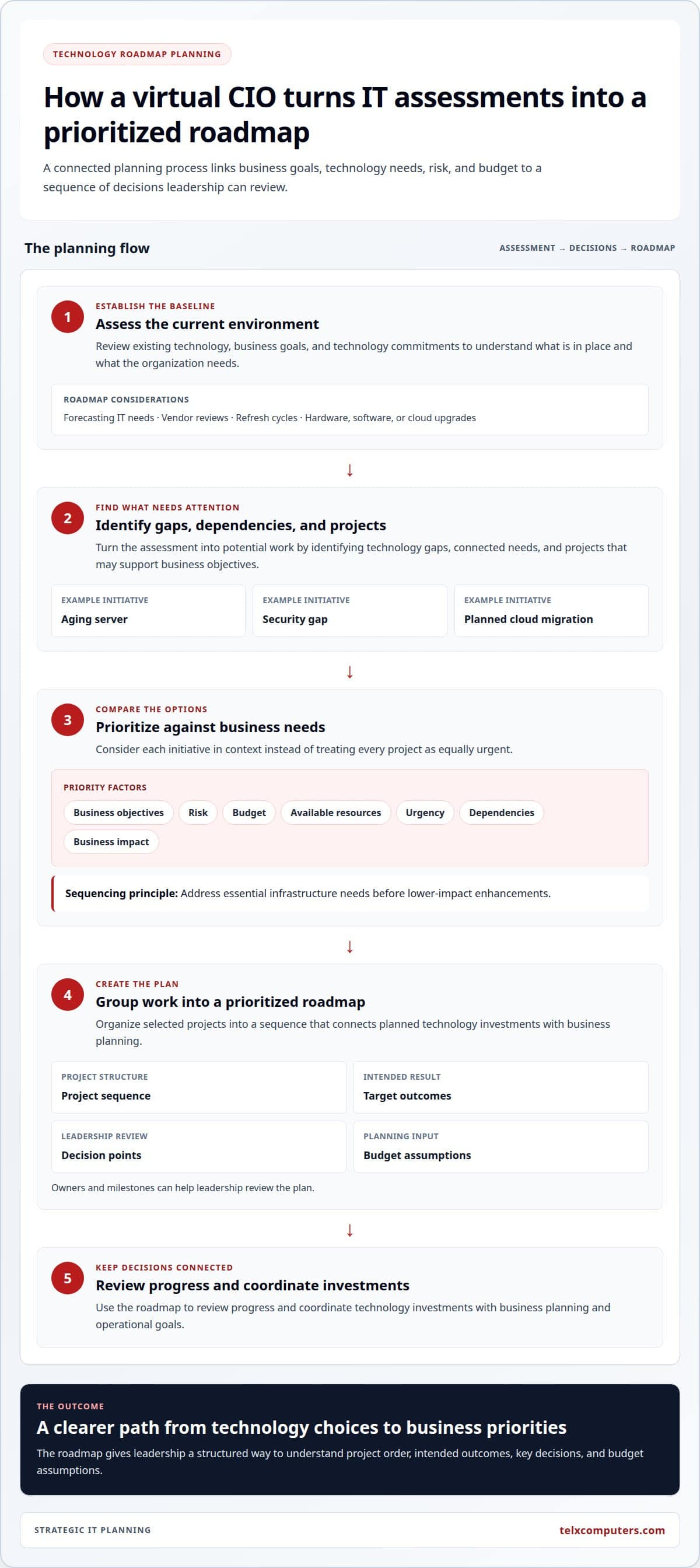
A virtual CIO for strategic planning in Fort Lauderdale helps leadership connect infrastructure decisions to business objectives. The roadmap turns assessments into sequenced investments, with owners and milestones to review.
Executive Technology Guidance
A virtual CIO gives executives a clear view of how technology supports business goals. Guidance can include forecasting IT needs, reviewing vendors, planning refresh cycles, and evaluating hardware, software, or cloud upgrades. For a virtual CIO for strategic planning in Fort Lauderdale, recommendations should explain the business reason behind each decision. A proposed cloud change, for example, should address an operational need, budget priority, or continuity concern.
Prioritizing Technology Initiatives
Prioritization starts by comparing initiatives against business objectives, risk, budget, and available resources. An assessment might identify an aging server, a security gap, and a planned cloud migration. Leadership can weigh urgency, dependencies, and business impact instead of treating all three as equal. The advisor helps sequence work so essential infrastructure needs come before lower-impact enhancements.
Roadmap Planning Process and Deliverables
A practical process begins with an assessment of the existing environment, business goals, and technology commitments. The advisor identifies gaps, dependencies, and potential projects, then groups them into a prioritized roadmap. Deliverables can include a project sequence, target outcomes, decision points, and budget assumptions. Leadership can use these materials to review progress and coordinate investments with business planning.
Industry and Local Business Requirements
Virtual CIO support can suit organizations that depend on reliable infrastructure, sensitive records, or connected teams. Healthcare practices and law firms, for example, may need plans that account for confidential information and consistent access. In Fort Lauderdale, a virtual CIO for strategic planning should consider each organization’s locations, workflows, growth goals, and continuity needs, rather than assume one template fits every industry. Fort Lauderdale IT planning should connect those requirements with clear executive priorities.
Risk assessment and compliance planning
A virtual CIO connects risk planning to business objectives, helping leadership understand how technology weaknesses could disrupt operations. The work can include an infrastructure assessment, IT risk assessments, and a practical plan for security measures, disaster recovery, and compliance activities. Each recommendation should tie to a specific exposure or operational need, not a generic checklist.
An infrastructure assessment maps the systems that support daily work: devices, networks, cloud services, data storage, user access, and technology providers. For example, a business that stores customer records in cloud applications needs to understand who can access them, how accounts are protected, and how data can be restored after a disruption. These findings clarify where existing technology investments support objectives and where gaps create risk.
Next, the virtual CIO evaluates risks by considering what could happen, which systems or information could be affected, and how operations would respond. A compromised email account, an unavailable server, or an interrupted internet connection each creates different business consequences. The assessment can rank these exposures by urgency and impact, then develop actions with owners, dependencies, and review points.
Compliance planning translates applicable obligations into coordinated technology processes without treating one framework as universal. Depending on the organization’s activities, planning may address access controls, data handling, security documentation, staff responsibilities, and evidence needed for internal reviews. The virtual CIO can identify which requirements apply to the business and align technology solutions with them, while qualified legal or compliance professionals interpret specialized obligations.
Risk reduction also depends on continuity planning. A recovery plan should identify critical systems, backup arrangements, restoration priorities, and decision-making responsibilities. For instance, if a file server becomes unavailable, teams need a defined process to recover essential files and resume priority work. Regular reviews can reveal changes in vendors, workflows, or infrastructure that alter the risk picture.
For a focused look at ransomware-related safeguards, review ransomware protection planning. A virtual CIO can bring these assessments together into an actionable risk register, aligning security priorities with efficiency, compliance planning, and ongoing business needs.
IT capital and operating budgets
A virtual CIO helps leadership distinguish planned technology purchases from recurring operating needs. That separation makes it easier to connect spending decisions with business goals and daily operations.
Capital and Operating Budget Planning
Capital planning covers larger investments, such as replacing aging infrastructure or upgrading core systems. Operating budgets account for recurring needs, including software subscriptions, support, connectivity, and cybersecurity services. A virtual CIO reviews both categories against the organization’s roadmap, existing commitments, and expected business priorities. For example, a planned system replacement may require coordination between equipment costs, migration work, and ongoing service expenses.
This view helps leaders understand the timing and business purpose behind each expense. It also highlights dependencies: a new application may require updated devices, stronger network capacity, or staff training. A clear budget connects these needs to operations rather than treating each purchase as an isolated line item.
Virtual CIO Cost Considerations
A virtual CIO’s cost in Fort Lauderdale depends on the engagement’s scope, organizational complexity, and planning cadence. The cost is determined after a quote request, with factors such as roadmap development, risk priorities, and vendor oversight shaping the work involved.
Compare the proposed scope with the decisions leadership needs support on. For example, an organization seeking budget reviews and vendor selection may need a different level of guidance than one coordinating a broad technology program. A defined scope helps clarify deliverables and keep the engagement aligned with business needs.
Budgeting and Roadmap Support
A virtual CIO can connect budget planning with the roadmap by grouping proposed work into phases, identifying dependencies, and matching investments to business goals. This gives leadership a practical basis for deciding which initiatives fit current priorities and which need later planning. In Fort Lauderdale and the wider South Florida area, organizations can account for local operating needs without assuming every business follows the same timeline.
Vendor selection fits into this process. A virtual CIO can assess whether a proposed technology solution meets requirements, supports existing systems, and serves the organization’s operations. For example, comparing a replacement platform against current workflows, support needs, and cybersecurity priorities can reveal costs beyond the initial purchase. The result is a more complete view of the commitment and its long-term business implications.
VCIO role and outsourced executive IT consulting
A virtual CIO provides strategic technology leadership through outsourced consulting. It connects executive decisions with practical IT priorities without requiring a full-time senior technology executive.
Virtual CIO Services
Virtual CIO services can include technology assessments, roadmap development, risk planning, budget guidance, and vendor relationship management. The advisor evaluates how current systems support business goals, then recommends actions leadership can implement. For example, a company planning growth might need to assess whether its cloud environment, security measures, and technology providers can support new workflows. The focus is executive direction, not routine troubleshooting.
Choosing a Virtual CIO
Fort Lauderdale businesses should look for an advisor who connects recommendations to operational needs, communicates clearly with leadership, and defines deliverables. Ask what the engagement covers, how priorities are reviewed, and how recommendations translate into decisions. A useful proposal might outline assessment work, roadmap updates, vendor reviews, and executive meetings. Local context matters when the advisor needs to understand the organization’s workflows and growth plans across Fort Lauderdale, Aventura, and Miami.
Virtual CIO, Full-Time CIO, and MSP Comparison
A full-time CIO is an internal executive; a virtual CIO provides strategic guidance through outsourced consulting. An MSP generally focuses on operating and supporting IT systems, while a vCIO concentrates on planning, risk, and leadership decisions. These roles can complement one another: executives set business priorities, a vCIO helps shape technology direction, and operational teams implement support plans.
Pricing models may be hourly for defined advice, project-based for a specific deliverable, or a monthly retainer for ongoing guidance. Pricing depends on the engagement and is provided after a quote request; scope, cadence, and responsibilities shape the cost. Compare each model based on the work covered and the continuity leadership needs.
For support aligning executive priorities with outsourced IT planning, discuss strategic IT consulting.
Telx Computers
Telx Computers helps turn technology priorities into practical IT support for your business. When your roadmap calls for dependable day-to-day operations alongside executive planning, its Managed IT Services can support the systems and infrastructure behind those priorities in Miami, Aventura, Fort Lauderdale, and South Florida.
Network Security and Cloud Computing can also address specific technology needs as your plans develop. The right mix depends on your business objectives, existing environment, and operational requirements. This approach connects strategic decisions with the services that help keep business technology supported, rather than treating each investment as an isolated fix.
If you’re ready to discuss how your technology priorities connect with ongoing IT needs, contact Telx Computers.
Put Your IT Priorities Into Motion
The next step is to make technology planning part of a regular leadership rhythm. Choose a business priority that needs clearer direction, such as improving continuity, supporting growth, or reducing uncertainty around future investments. Then align executive decisions with operational responsibilities so plans move forward in a coordinated way.
A virtual CIO for strategic planning in Fort Lauderdale can help connect those priorities to the technology decisions your business makes. Telx Computers supports businesses with Managed IT Services, 24/7 Help Desk Support, and Network Security, helping connect strategic direction with practical IT operations.
When you’re ready to discuss how your technology plans and support needs fit together, contact Telx Computers about vCIO services. A clear conversation can help you identify the next priority and move ahead with greater confidence.
Frequently Asked Questions
What is a Virtual CIO and Does Your Business Need One?
A virtual CIO provides outsourced technology leadership and can help when important IT decisions lack a clear executive owner. For example, if department leaders request competing system changes, a vCIO can help leadership assess business impact and set priorities. Businesses with an established technology executive may instead use this support for a defined planning initiative or specialized guidance.
What is a vCIO and why do I need one?
A vCIO is an external strategic technology advisor who connects IT decisions with organizational needs. Consider the role if leaders need a clearer basis for decisions such as expanding cloud use, replacing a core system, or coordinating technology across departments. The value lies in structured advice and decision support, not in replacing the people who operate your systems or own business outcomes.
What are the steps in a virtual CIO strategic planning process?
A useful process starts by gathering priorities from leadership and the teams who rely on technology every day. The advisor then documents decision-makers, operational constraints, and current commitments before developing recommendations. Leadership reviews the options, assigns ownership, and agrees on how progress will be evaluated. For example, a system change can have a designated business sponsor and an agreed measure of whether it meets the intended need.
What cybersecurity, compliance, and disaster recovery risks should a virtual CIO address?
A virtual CIO should consider risks that could expose information, interrupt essential work, or prevent recovery. Examples include compromised user accounts, ransomware, excessive access permissions, unavailable cloud services, and backups that cannot restore critical files. Compliance planning should account for the organization’s actual obligations and data practices. Recovery discussions should clarify which functions resume first, who makes decisions, and how teams communicate during a disruption.