




04 Nov IT Risk Assessment for Aventura Businesses and Their Threats
Start with the business, not the software. An IT risk assessment for businesses in Aventura identifies the systems, data, people, and processes the company depends on, then evaluates threats by likelihood and potential impact. The findings should prioritize practical steps to reduce the most serious risks.
When security concerns span technology, staff practices, and daily operations, a structured assessment brings them together. It examines technical weaknesses alongside non-technical risks, such as outdated access or unclear procedures. This guide explains how to get started, what an assessment examines, how long the work may take, and what to look for in the written findings. It also shows how a business technology assessment can connect identified risks to decisions about security controls, continuity, and future IT investment, making next steps more manageable.
Key Takeaways
- Start by mapping the systems, data, people, and processes your business depends on so the assessment reflects real operations.
- Look beyond automated scans to include access practices, policies, physical security, and continuity risks.
- Assessment timelines depend on the environment’s scope and complexity; written findings should make risks and priorities clear.
- Use prioritized recommendations to connect security decisions with business needs, technology plans, and ongoing protection.
IT consulting and vulnerability assessments
A useful assessment connects technical findings to business impact. It reviews systems, controls, access, and remediation priorities instead of treating a scan result as the whole picture.
Risk Assessments and Vulnerability Scans
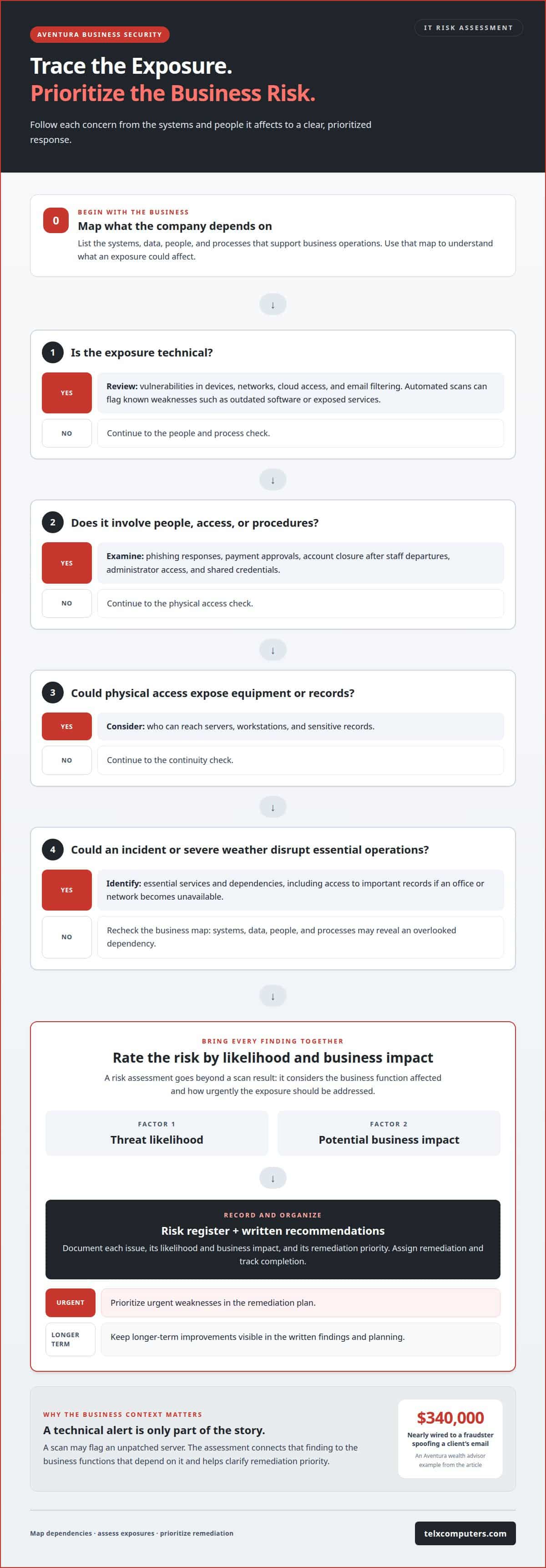
An automated vulnerability scan searches for known technical weaknesses, such as outdated software or exposed services. A risk assessment goes further by weighing threat likelihood against potential business impact and considering processes, policies, and physical security. For example, a scan may flag an unpatched server, while the assessment identifies which business functions depend on it and how urgently it should be addressed.
Control and Vulnerability Reviews
A control review examines whether safeguards work together across accounts, devices, networks, and data. It can compare access permissions with job responsibilities and identify accounts with unnecessary access. Patch and vulnerability management turns findings into action: record each weakness, rank its severity and business impact, assign remediation, and track completion. For a healthcare office, protecting systems that hold sensitive information is a practical priority.
Assessment Scope and Steps
An IT risk assessment includes an inventory of key technology and data, a review of security controls, threat analysis, risk ratings, and written recommendations. It begins by defining business priorities and scope. The assessor then gathers system and policy information, evaluates vulnerabilities and non-technical exposures, and ranks findings by likelihood and impact. The resulting risk register helps organize remediation and security investment.
Choosing a Local Assessment Provider
For an IT risk assessment for businesses in Aventura, look for a provider that explains its method, scope, and deliverables in plain language. Written findings should distinguish urgent weaknesses from longer-term improvements and connect recommendations to business impact. Ask how the assessment covers technical vulnerabilities and operational controls, and how it can reflect your industry, such as healthcare. A clear remediation plan makes the findings actionable.
Identifying technical and non-technical threats
Cybersecurity reviews should examine how threats enter systems and disrupt operations. Technical risks include phishing links, exposed accounts, unpatched devices, and weak network configurations. Non-technical risks include unclear approval procedures, poor access handoffs, and physical access to equipment. A thorough IT risk assessment for businesses in Aventura considers both, because an overlooked process can undermine otherwise effective technical safeguards.
Email is a common route for fraud and credential theft. For example, a wealth advisor in Aventura nearly wired $340,000 to a fraudster spoofing a client’s email. An assessment can trace how staff verify payment changes, how email security flags suspicious messages, and who approves transfers. Reviewing these steps reveals whether technology and business procedures reinforce each other.
Staff changes can create another exposure. A former employee’s security credential might remain active long after departure, leaving an unnecessary route into company systems. Assessors examine account-closure procedures, administrator access, and shared credentials. They also consider hurricane-season continuity, including whether staff can access essential records if an office or network becomes unavailable.
To identify threats effectively, organize findings by how they could affect business operations:
- Technical: Review vulnerabilities in devices, networks, cloud access, and email filtering.
- Human: Examine phishing responses, payment approvals, and access changes after staff departures.
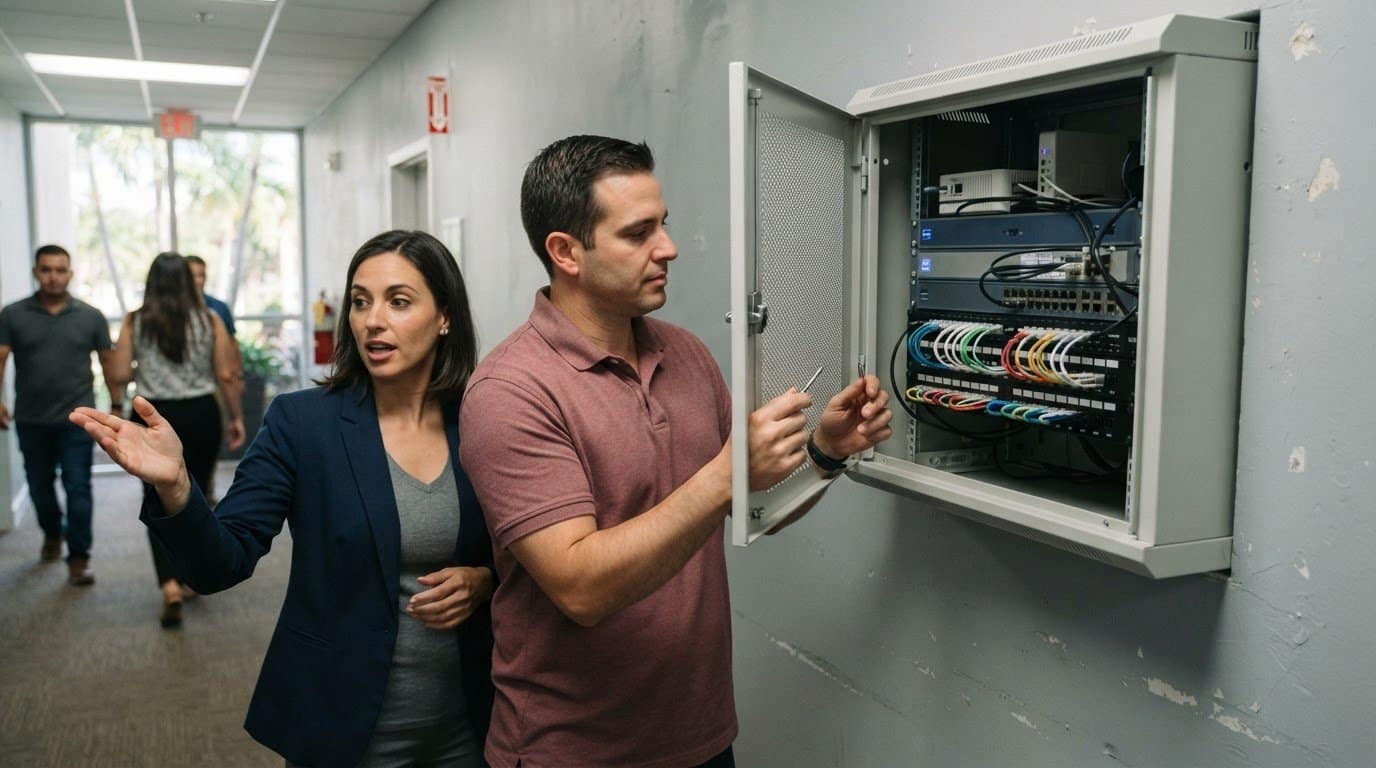
- Physical: Consider who can reach servers, workstations, and sensitive records.
- Continuity: Identify essential services and dependencies affected by severe weather or an incident.
Then connect each exposure to a response. A phishing weakness may call for stronger email security and staff procedures; an access gap may require account controls. Incident planning can also include tabletop exercises, playbook development, and team preparation before an event occurs. Ongoing review keeps cybersecurity controls aligned as systems, roles, and threats change. Network security controls can help address technical exposures identified during this review.
Assessment timelines and written findings
The assessment schedule depends on scope, system complexity, and access to records. Reviewing one office with centralized systems differs from tracing several locations, cloud platforms, and business-critical applications. In South Florida, planning should also account for operational demands, such as busy periods or hurricane preparation. A clear kickoff defines the systems, stakeholders, evidence, and decision points in scope.
The work typically follows a sequence: confirm scope, gather information, evaluate exposures, validate findings, and prepare the report. Current network diagrams, policies, asset records, and account procedures help keep the process focused. Scattered records or credentials that require approval can extend information gathering. The schedule should identify dependencies and keep business contacts informed about requested access and review milestones.
Written findings should help decision-makers understand the risk and response. A useful report records each issue, its potential business impact and likelihood, and its recommended remediation priority. A risk register can organize exposures for planning and security investment. For example, a finding about backup recovery should identify the business process that depends on the data and the action that would reduce the exposure.
During review, confirm that each recommendation is specific enough to assign and track. Findings should separate immediate corrective work from longer-term improvements without burying urgent issues in technical detail. A practical report may identify an owner, proposed action, and status for each item. It should also explain how continuous monitoring can surface changes after the assessment, such as new vulnerabilities or altered access.
Use the findings to connect remediation with operational priorities. If an incident could interrupt essential services, the organization can prioritize response planning and recovery dependencies. Where backups support critical records, server monitoring systems can help maintain visibility into infrastructure between formal reviews.
Business technology assessments
A business technology assessment connects cybersecurity priorities to daily operations. For businesses in Aventura, that means weighing endpoint protection, essential systems, and the business impact of a disruption.
Business Technology Assessment Scope
The assessment maps how technology supports business functions, from staff devices and cloud tools to systems that store customer information. Business owners can use the findings to identify assets that need stronger protection and dependencies that could interrupt service. Each issue should connect to a business consequence rather than appear as an isolated technical detail.
Scope should reflect the organization’s actual work. A firm that processes payments may prioritize transaction systems, while a professional office may focus on access to client records. Assessors can group endpoints, data, accounts, and critical services, then rank risks by likelihood and impact. This turns a broad technology inventory into prioritized decisions about controls, remediation, and future investment.
Aventura has more than 4,000 companies, so a useful assessment reflects each organization’s operations rather than relying on a generic checklist. One practical step is to map a business process, such as accepting a customer payment, to the devices, accounts, and data it depends on. That reveals where a single weak control could affect more than one system.
Applicable Florida Regulations
Which requirements matter depends on the business’s sector, data, and relationships. According to the U.S. Department of Health and Human Services, HIPAA, PCI DSS, NIST, and GDPR are cybersecurity compliance requirements or standards relevant to some businesses. These are not interchangeable: the assessment should identify which obligations or frameworks fit the organization’s activities, then connect them to relevant controls and evidence.
For example, a healthcare organization should consider how its systems protect sensitive health information, while a business handling payment-card data should review safeguards relevant to that environment. The assessment documents gaps and assigns remediation priorities; it does not replace legal or compliance advice. Clear mapping helps business owners distinguish applicable requirements from controls adopted as broader security practices.
An assessment does not itself establish grant eligibility, satisfy an insurer’s specific conditions, or create a tax incentive. Business owners should evaluate a named program’s eligibility terms, insurance policy wording, and applicable tax rules separately from the technical review.
Telx Computers
Telx Computers helps businesses turn assessment priorities into practical IT decisions in Miami, Aventura, and Fort Lauderdale. When findings point to gaps in network protection, cloud environments, or day-to-day support, its Managed IT Services can align ongoing technology management with business needs.
Use the assessment’s prioritized findings to guide the conversation: identify which risks need attention, what systems matter most, and where ongoing support would help maintain controls. Telx Computers offers Network Security, Cloud Computing, and 24/7 Help Desk Support to address relevant operational needs without treating every finding as a separate fix.
To discuss your business’s IT priorities in Aventura, contact Telx Computers.
Turn your findings into a stronger IT plan
The value of an IT risk assessment for businesses in Aventura lies in what happens after the review: decisions become assigned work, and security priorities remain connected to business operations. Use the findings to establish ownership, track remediation, and revisit priorities when systems, staff responsibilities, or business processes change. This makes risk management part of technology planning rather than a document that sits unused.
As you plan the next step, focus on the decisions your team needs to make: which risks deserve attention first, how progress will be tracked, and where expert IT guidance can support implementation. Telx Computers can discuss how its IT services align with your assessment priorities and business needs in Aventura.
Contact Telx Computers about an assessment to discuss a practical path forward for your business. A clear plan can help your team move ahead with focus and confidence.
Frequently Asked Questions
How do I get started?
Start by assigning an internal owner and defining the business decision the assessment should support. Identify an important workflow, such as processing customer payments, then note the systems and teams it depends on. Gather existing security policies and incident records for the assessor. This focused starting point frames the review around operational priorities instead of producing an unfocused technology inventory.
What cybersecurity risks are common for small and midsize businesses in Aventura and South Florida?
Common concerns include ransomware, phishing, business email compromise, stolen credentials, and operational disruption. A South Florida company may also need to consider hurricane-related interruptions to facilities or technology access. Risk depends on the business’s systems and processes: an organization that relies on email approvals, for example, faces different exposure from one with heavily used customer portals. Assess threats against real business workflows.
How can Aventura businesses assess ransomware, phishing, and business email compromise risks?
Trace how each threat could enter, what it could affect, and how the organization would respond. For ransomware, examine recovery priorities and whether critical data can be restored. For phishing, consider how staff report suspicious messages and how email controls handle them. For business email compromise, map payment-change approvals and trusted-contact verification. A tabletop exercise can reveal decision-making gaps before an incident occurs.
How often should a business conduct an IT risk assessment?
Most Miami businesses should plan an annual risk assessment and conduct vulnerability scans regularly. Revisit the assessment sooner after a major change, such as adopting a new cloud platform, acquiring a business, or experiencing a security incident. These events can alter system dependencies, access, and business impact. Keep the schedule tied to meaningful operational changes, rather than treating a calendar date as the only reason to review risk.
How do IT risk assessments differ from vulnerability assessments and penetration tests?
An IT risk assessment considers business impact, threat likelihood, technical weaknesses, and operating practices together. A vulnerability assessment focuses on identifying and evaluating weaknesses, often through automated scanning. A penetration test goes further by attempting to exploit selected weaknesses within an agreed scope, showing whether specific defenses can be bypassed. Businesses may use these activities together, but each answers a different security question.